
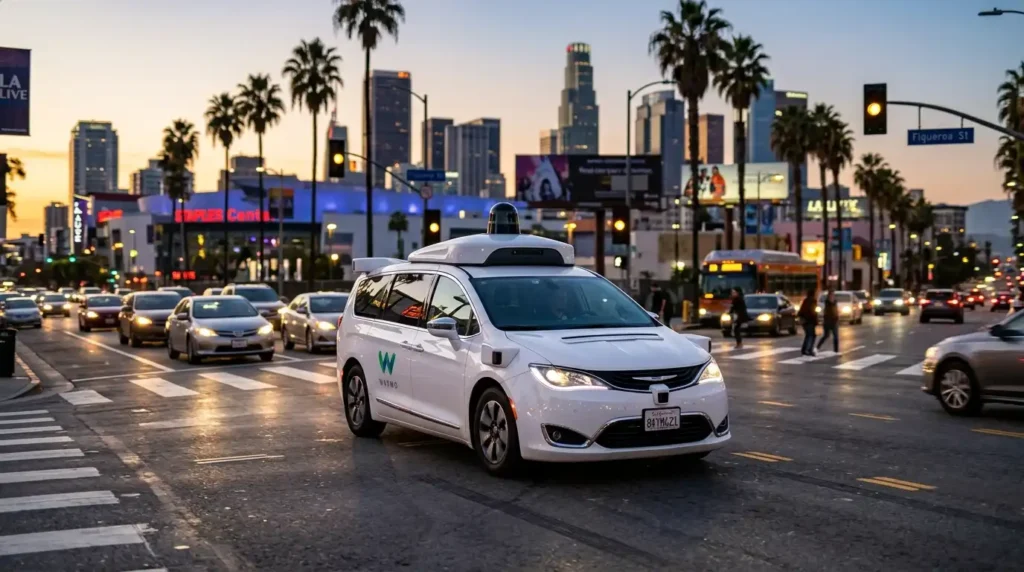
The Complex Legal Framework of Autonomous Vehicle Crashes
In traditional personal injury claims, California operates under a fault-based system governed by standard negligence principles. Plaintiffs must establish that a human driver breached their duty of care, directly causing injuries and financial damages. In driverless AV collisions, there is no human driver in the vehicle to hold accountable. Consequently, legal liability generally shifts toward corporate entities, technology developers, and commercial fleet operators.
Victims injured in accidents involving Waymo, Cruise, or other Automated Driving Systems (ADS) generally pursue compensation through two primary legal theories: Strict Product Liability and Corporate Negligence.
1. Strict Product Liability
Under California strict product liability law, manufacturers, software designers, and distributors can be held liable if a product defect causes harm, regardless of whether the company acted with explicit carelessness. In autonomous vehicle litigation, product defect claims typically fall into three categories:
- Design Defects: Flaws in the vehicle’s primary architecture, such as algorithmic failures in object recognition, misinterpreting pedestrian behavior, or incorrect mapping updates.
- Manufacturing Defects: Physical flaws that occurred during the vehicle’s assembly, such as faulty brake actuators or improperly installed sensor mounts.
- Failure to Warn / Inadequate Warnings: Insufficient instructions or warnings regarding system limitations, operational boundaries, or handoff protocols during mixed-autonomy testing.
2. Negligence and Common Carrier Liability
In addition to product liability, injured parties may bring traditional negligence claims against fleet operating companies. Operating entities have a legal duty to properly maintain their fleets, regularly recalibrate optical sensors, download critical safety patches, and pull vehicles from service upon detecting system glitches.
Furthermore, under California Civil Code § 2100, entities that carry passengers for reward are classified as common carriers and owe their riders the utmost care and diligence. If you are injured as a paying passenger inside a robotaxi, this heightened legal standard can significantly bolster your compensation claim.
Who Can Be Held Accountable in an LA Robotaxi Collision?
Because autonomous transit involves an interconnected network of hardware, software, and human oversight, multiple parties may share financial responsibility following a crash:
- AV Parent Companies and Operators: Corporate entities such as Alphabet Inc. (Waymo) or General Motors (Cruise) that own, test, and commercially deploy the fleets.
- Third-Party Software and Hardware Developers: Original equipment manufacturers (OEMs) that supply specific LiDAR units, radar systems, camera lenses, or third-party artificial intelligence chips.
- Fleet Maintenance Contractors: External vendors contracted to handle mechanical servicing, tire rotations, or cleaning sensor arrays who fail to carry out proper maintenance work.
- Other Human Drivers: External motorist negligence remains a frequent factor. If a human driver runs a red light on Wilshire Boulevard and impacts a robotaxi, that human driver remains liable for resulting damages.
Evolving California AV Regulations and Enforceability
California regulatory bodies have continually updated oversight frameworks to match rapid technological deployment. The California Department of Motor Vehicles (DMV) and the California Public Utilities Commission (CPUC) enforce rigorous permitting standards, mandatory mileage tracking, and strict collision reporting requirements for all testing and commercial deployment operators.
Importantly, legislative changes such as Assembly Bill 1777 (AB 1777) significantly update how law enforcement interacts with driverless vehicles. Under this framework, police officers observing a traffic violation committed by a driverless vehicle can issue official citations directly to the vehicle’s manufacturing or operating company. For accident victims, a police citation issued to a driverless car manufacturer provides crucial official documentation establishing a traffic violation and proving liability in civil court.
Crucial Evidence Needed to Establish Fault
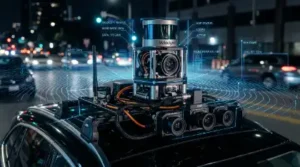
Unlike standard traffic collisions where photo evidence and eyewitness statements form the bulk of the proof, autonomous vehicle cases rely heavily on digital telemetry. AVs are equipped with extensive sensor suites that continuously record operational data.
To establish liability, personal injury attorneys must secure access to essential digital evidence before it is overwritten or deleted:
- Event Data Recorders (EDRs) & Black Box Logs: Timestamped records showing speed, braking activation, steering angles, and system engagement status seconds prior to impact.
- 360-Degree Sensor Video Feeds: Onboard camera recordings capturing surrounding traffic, weather, road markings, and peripheral movements.
- Remote Assistance Communications: Logs and audio transcripts detailing interactions between the onboard vehicle software and offsite human remote operators who provide guidance during complex driving maneuvers.
- Software Version & Patch Histories: Historical records confirming whether the vehicle was operating on outdated software or lacked critical safety updates.
Because corporate fleet operators control this proprietary data, receiving legal assistance to issue formal spoliation letters promptly is vital to preserving critical evidence.
Pure Comparative Negligence in California Crash Claims
 Under California’s pure comparative fault doctrine (Li v. Yellow Cab Co.), an injured party can recover financial damages even if they were partially at fault for the collision. Your final compensation award is reduced proportionately by your percentage of assigned fault.
For example, if a jury determines that a pedestrian stepped off a curb outside a crosswalk and was 20% at fault, but Waymo’s perception system failed to brake appropriately, attributing 80% fault to the vehicle operator, the injured pedestrian can still recover 80% of their total calculated damages.
Protecting Your Rights After an AV Collision in Los Angeles
Navigating an accident claim involving a multi-billion-dollar technology company requires deep legal experience and technical expertise. If you or a family member is struck by a driverless vehicle or injured as a passenger in a robotaxi, take immediate protective steps:
- Seek Immediate Medical Care: Ensure your injuries are evaluated promptly by healthcare professionals.
- File a Police Report: Request a police response so investigating officers can document the scene and issue noncompliance notices if applicable.
- Document the Scene: Capture photos of all vehicle identification numbers, sensor domes, license plates, visual indicators, and surrounding road conditions.
- Consult a Personal Injury Attorney: Avoid signing blanket release forms or giving recorded statements to corporate risk adjusters before speaking with a qualified legal representative.
Under California Code of Civil Procedure § 335.1, injured individuals generally have two years from the date of the accident to file a personal injury lawsuit. Taking swift action ensures vital technical data is preserved and your legal rights are fully protected.